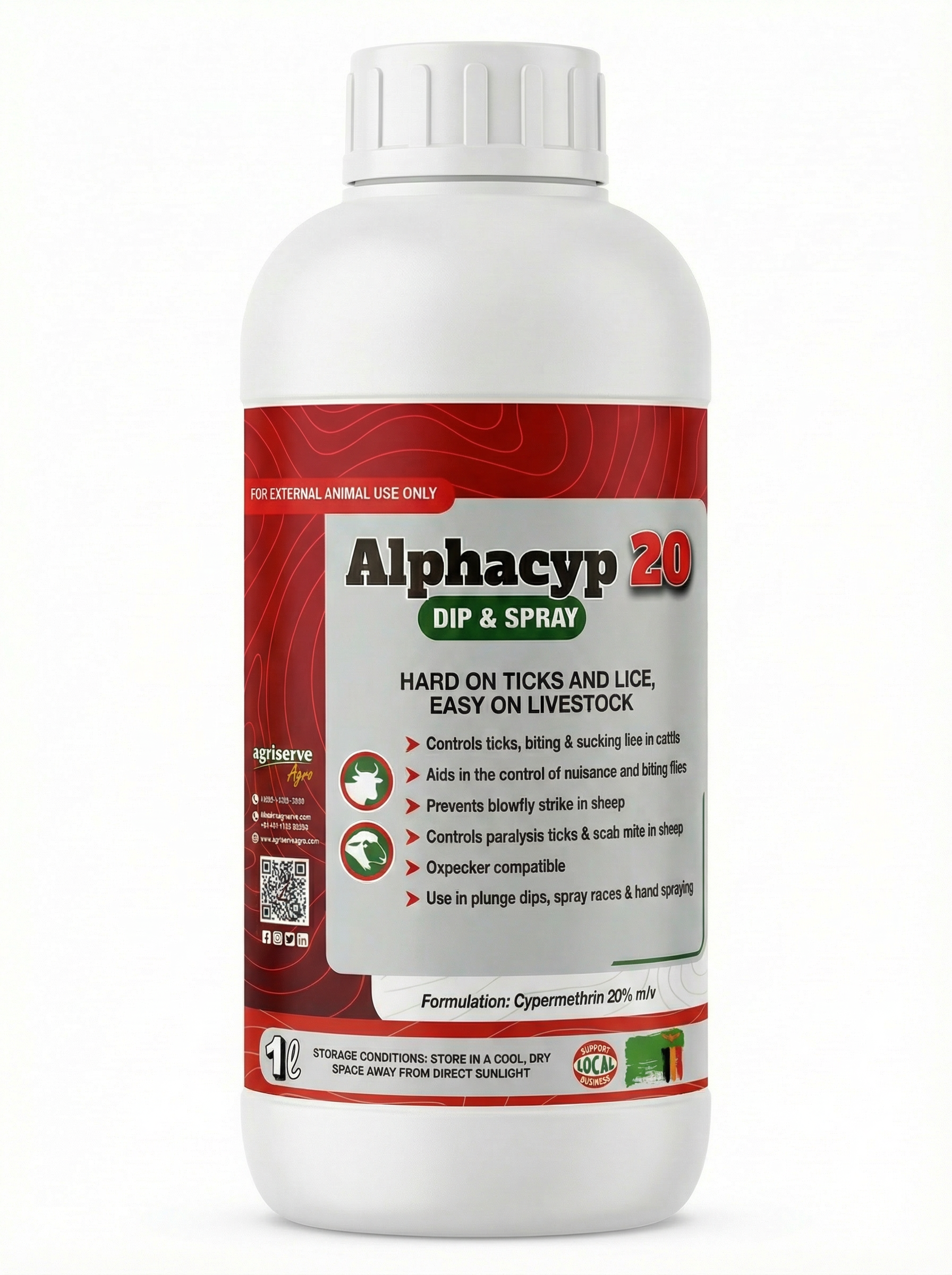
ALPHACYP 20
Cypermethrin 20% m/v
MA Number: ZAMRA-AC-25-146
P/L No: ZAMRA-PHAR/MAN-25-0069
Dosage & Dilution Rates
Plunge Dips (Cattle & Sheep)
| Method | Dosage | Notes |
|---|---|---|
| Fresh fill | 1L per 1,000L water | 1:1000 dilution |
| Replenishment (standard) | 1L per 1,000L water | 1:1000 dilution |
| Replenishment (heavy tick) | 1L per 800L water | 1:800 — use where labelled or under heavy challenge |
Spray Races
| Method | Dosage | Notes |
|---|---|---|
| Fresh fill | 1L per 1,000L water | 1:1000 dilution |
| Replenishment | 1L per 800–1,000L water | Adjust based on tick pressure |
Hand Spraying
| Method | Dosage | Notes |
|---|---|---|
| Dilution | 10ml per 10L water | 1:1000 dilution |
| Volume per animal | 5–10L dipwash per animal | Spray from below upwards to lift hair |
| Focus areas | — | Ears, under tail, tail brush, belly, legs |
Sheep-Specific
| Method | Dosage | Notes |
|---|---|---|
| Plunge dip dilution | Same as cattle (1:1000) | Fresh fill and replenishment |
| Sheep scab treatment | Two dippings 9 days apart | At 1:1000 dilution — controls Psoroptes ovis |
Dilution Calculator
Calculate the exact amount of ALPHACYP 20 needed for your dip tank, spray race, or hand spraying operation.
Premixing Step: Always add the measured volume of ALPHACYP 20 to double that volume of water (while stirring) to form a creamy emulsion before adding to the dip tank.
Always confirm dilution rates with the product label.
Recommended Dipping Intervals
| Condition | Recommended Interval |
|---|---|
| Ticks, lice, screwworms (heavy infestation) | Weekly for 2–3 weeks until free of ticks |
| Ticks (maintenance) | Fortnightly, year-round including winter |
| Severe brown ear tick infestation | Weekly dipping may be required |
| Nuisance & biting flies | Weekly for 3 weeks, then repeat as necessary |
| Sheep scab (Psoroptes ovis) | Two treatments 9 days apart at 1:1000 |
| Blowfly strike prevention | Up to 4 weeks protection at 1:1000 dilution |
Withdrawal Periods
Directions for Use
Shake well before use. Protect from extremes of heat and cold.
Premixing (Critical Step): Add a measured volume of concentrate to double that volume of water while stirring to produce a creamy emulsion.
Add this premix to the bulk of the water in the diptank or spray race sump.
Agitate to achieve thorough mixing of the dipwash.
For hand spraying, thoroughly wet the animal by spraying from below upwards so that the hair is lifted by the spray. Concentrate on the ears, under the tail and in the brush of the tail.
Special Management Guidelines
Calves: Dip calves under 3 months separately from the adult herd. Ideally treat calves after the main group.
Spray Race Best Practice: Do not carry dipwash over between spray sessions. Always mix fresh dipwash (±3L per animal plus an amount for the pump system).
Sheep Lameness Prevention: Using a cattle dip tank for sheep may cause post-dipping lameness. To prevent this, add 400g zinc sulphate per 1,000L dipwash.
Sheep Scab: Sheep scab is a notifiable disease. Treatment of suspected or confirmed outbreaks must be under government supervision.
Blowfly Strike: AlphaCyp 20 at 1:1000 dilution provides up to 4 weeks protection. Not recommended as a curative treatment for established blowfly strike.
Tick-Borne Disease Immunity
Important Advisory: Effective dipping may in time give rise to very low tick infestations. This could adversely affect immunity to tick-borne diseases, especially in young stock. It is therefore advisable that animals be immunised against tick-borne diseases. If this is not possible, young stock under 4 weeks should not be dipped unless tick infestation is excessive.
Precautions
First Aid
Should accidental poisoning or contact occur, wash well with soap and water. Induce vomiting if swallowed. Note to practitioner: Treat symptomatically.